Lyric Writing Tips: A Case Study in Structural Precision and Artistic Craft (2026)

The most moving lyrics are not born from a lightning strike of genius. They are built with the quiet precision of an architect. Many writers struggle when a beautiful melody is weighed down by clunky, uneven phrasing. It's the feeling of a square peg forced into a circular rhythm. You often settle for predictable rhymes because the right word feels out of reach. You watch the original spark fade during the editing process. These challenges are common, but they are also solvable with the right lyric writing tips.
This guide will help you master the disciplined art of songwriting. We'll move beyond the myth of pure inspiration into the technical architecture of rhythm and rhyme. You'll find a clear framework for analyzing meter. We'll introduce sophisticated phonetic tools that elevate your vocabulary. Finally, we'll explore how to track the evolution of your work through every draft. This ensures your original vision remains intact while your craft reaches a professional standard. Great songs aren't found. They are made.
Key Takeaways
- Shift your perspective from waiting for inspiration to mastering the structural discipline of songwriting.
- Apply precise lyric writing tips to analyze meter and syllable counts, removing the rhythmic friction between your words and the melody.
- Elevate your vocabulary by moving beyond predictable rhymes toward sophisticated phonetic textures like assonance and consonance.
- Utilize version management to iterate on your lyrics with confidence, protecting the evolution of your song through every draft.
Beyond Inspiration: The Shift from Casual Writing to Lyrical Craft
Songwriting is not a passive act of waiting. It is a pursuit of structural integrity. Inspiration provides the raw material, but craft provides the architecture. The "lightning bolt" of a sudden idea is a persistent myth. Professional writers know that great songs are built, not found. They treat lyrics as a discipline of phonetic choice and rhythmic balance. This requires a deep understanding rhyme schemes to ensure every line lands with the intended weight.
Sensory language is the foundation of a good story. It brings color and emotion. However, structure is the frame that holds that color in place. Without a rigid frame, the emotion bleeds and the message fades. Intentional songwriting is a framework for elite craft. It moves the writer from a hobbyist mindset to that of a dedicated artisan. These lyric writing tips emphasize the value of human effort over automated shortcuts. It's about making choices that matter.
The Roadblocks of the Unstructured Lyricist
Unstructured writing often results in clunky phrasing. You encounter forced rhymes that feel predictable or juvenile. Erratic meter creates rhythmic speed bumps that pull the listener out of the moment. The greatest frustration is losing the original spark. When you struggle to fix technical errors without a system, the initial emotion often evaporates. Precision doesn't kill creativity. It protects it. It ensures your voice is heard clearly.
Setting the Digital Sanctuary
Deep creative work demands a sanctuary. It requires a focused environment free from the noise of the modern world. You need a space that respects your individual agency while providing the data necessary for refinement. The right tools don't write for you. They offer technical insights into syllable counts and meter. They allow you to make better choices. They provide a quiet, focused companion for your creative journey, ensuring the integrity of your work remains the priority.
The Rhythmic Blueprint: Mastering Syllables and Meter Analysis
Rhythm is the heartbeat of the lyric. It dictates how the listener breathes. Many writers focus on the "singability" of a hook without analyzing the underlying math. Syllable count directly impacts melodic phrasing. If a line is too long, the melody feels rushed. If it's too short, the song loses momentum. Prosody is the ultimate goal. It's the marriage of rhythm and emotional intent. When the stress of the word matches the stress of the beat, the message resonates.
Meter is the blueprint of the earworm. Consistency creates familiarity. Matching line lengths across corresponding verses provides a sense of structural stability. This is why having Poetic Meter Explained is essential for any serious writer. It helps you identify "rhythmic speed bumps." These are moments where the natural cadence of speech fights the melody. Smooth these out to keep the listener engaged. These practical lyric writing tips ensure your craft remains intentional and professional.
A Step-by-Step Rhythmic Audit
Conducting an audit requires precision. It's a methodical process that removes clutter and identifies weakness.
- Count every syllable. Find unintended variances between verses that should match.
- Map stressed and unstressed syllables. Ensure the natural cadence flows with the music.
- Refine word choices. Find synonyms that fit the meter without losing the soul of the line.
Tools for the Lyrical Pulse
Guesswork is the enemy of professional craft. Advanced syllable counting and meter analysis tools provide objective clarity. They allow you to stop "feeling" the rhythm and start "seeing" it on the page. This visual data reveals structural flaws that the ear might miss in the heat of creation. By using a specialized songwriting environment, you protect your creative agency while embracing technical excellence. Precision is the path to refinement.

Expanding the Lexicon: Beyond Basic Rhymes to Phonetic Nuance
Perfect rhymes often feel juvenile. They are predictable. They signal the end of a thought before the listener arrives. This breaks the tension. Modern texture requires more than simple pairings. Explore the subtle world of near rhymes. Use assonance to repeat vowel sounds for a haunting effect. Employ consonance to ground your lines with hard consonant structures. These create a sophisticated resonance. Internal rhyme adds hidden layers. It keeps the listener engaged without being obvious. These are essential lyric writing tips for the serious artisan who values depth over convenience.
Language is a vast landscape. Writing across English, French, and Spanish offers unique phonetic opportunities. Each language possesses its own rhythmic weight and sonic character. Spanish vowels provide a bright, open resonance. English consonants offer a percussive drive. French phrasing delivers a fluid, melodic elegance. Cross-pollinating these sounds can inspire new structural choices. It expands your creative palette beyond the limitations of a single tongue. This multilingual approach fosters a more global and nuanced perspective on songwriting.
The Architect’s Toolset
Precision requires the right equipment. A near rhyme dictionary helps you avoid the obvious. It offers sophisticated alternatives that maintain the song's emotional weight. A word explorer is equally vital for the intentional writer. It ensures thematic consistency through precise synonyms and definitions. These tools don't replace your voice. They provide the technical data needed to make better choices. They respect your creative agency.
Crafting Conversational Authenticity
Poetry must feel human. You must balance complex devices with the need for conversational lyrics. When a rhyme is too perfect, it breaks the illusion of natural speech. Phonetic precision enables more natural-sounding speech in song because it prioritizes the flow of the thought over the convenience of the rhyme. This creates an intimate connection with the audience. To start building your own lexicon with structural precision, explore the multilingual writing tools designed for intentional creators.
The Iterative Draft: Using Version Management to Refine the Opus
The first draft is a sketch. The final song is a sculpture. Professional songwriters rarely settle for the initial spark. The best line is often discovered in the third or fourth iteration of a thought. This is where structural precision meets artistic craft. Version management provides the psychological safety required for this deep work. It removes the fear of loss. When you know you can always return to a previous draft, you are free to experiment. You can push the boundaries of your own creativity.
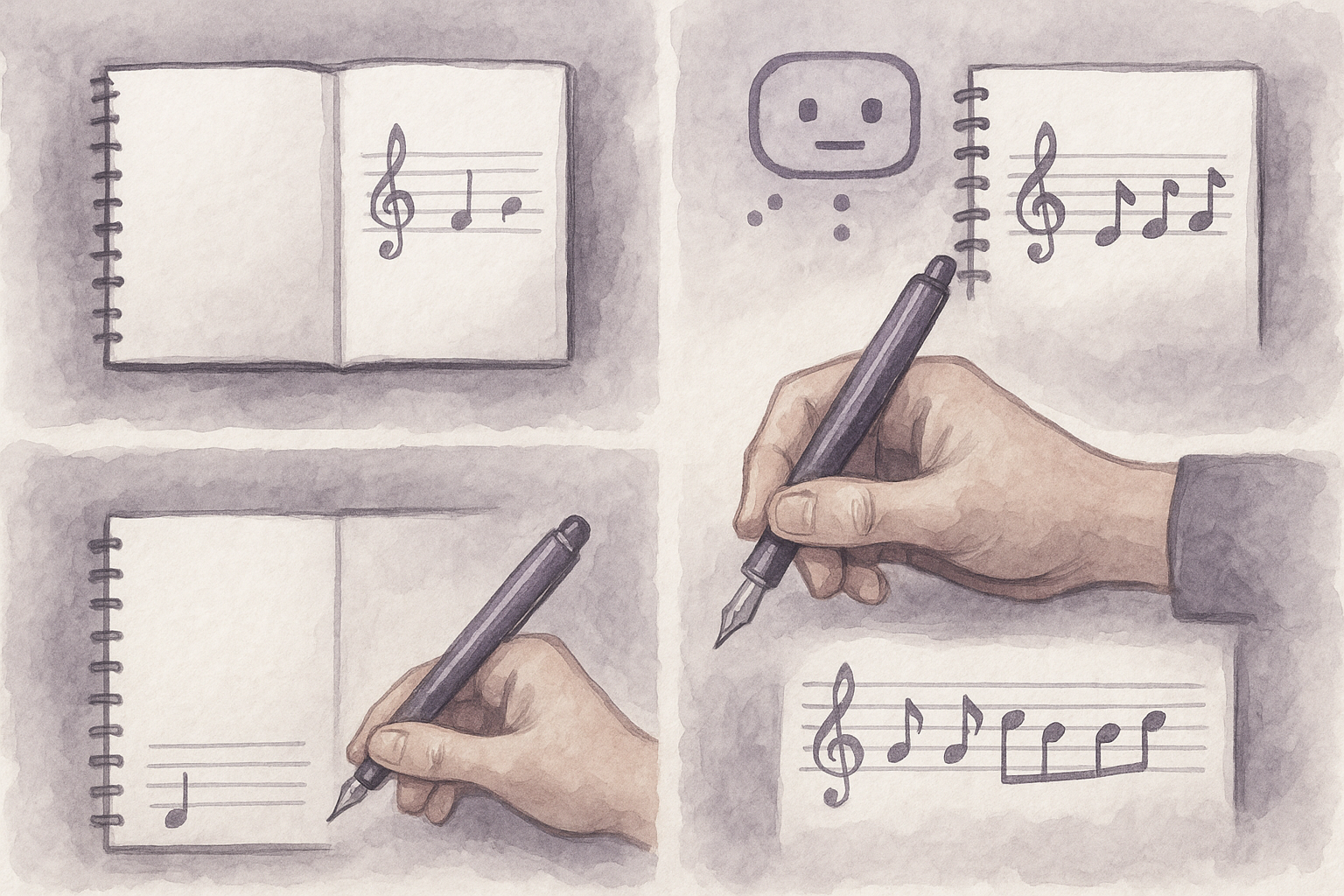
Consider the evolution of a single stanza. A writer might start with a predictable rhyme. By the second version, they focus on syllable count. By the fourth, they have refined the phonetic texture. They have moved from a generic sentiment to a specific, resonant image. This methodical progression leads to a superior final songtext. These lyric writing tips transform a chaotic process into a steady discipline. Precision is not the enemy of the spark. It is the vessel that contains it.
Preserving the Creative Spark
Killing your darlings is common advice. It's easier to follow when your darlings are archived, not deleted. Protecting the creative evolution is essential for growth. Version history allows you to compare different rhythmic approaches to the same hook. You can see the growth. You can measure the improvement. This transparency builds confidence in your own agency. It ensures that the soul of the song survives the rigors of refinement.
Final Polish and Professional Standards
The final stage is a ritual of verification. Apply a professional songwriter’s checklist to the finished draft. Inspect the meter. Audit the rhymes. Confirm the emotional clarity. Songwriting is a lifelong discipline of refinement. It's a quiet conviction in the value of human effort. Every choice matters. Every draft brings you closer to the truth of the song. The work is never truly finished, but it can be mastered.
Mastering the Architecture of the Song
Songwriting is a discipline of deliberate choices. It requires a balance of phonetic texture and rhythmic precision. These lyric writing tips have explored the necessary shift from passive inspiration to active structural mastery. You now possess the framework to audit your meter and expand your lexicon with phonetic nuance. You understand that the best work is found through iterative refinement. To sustain this level of excellence, you need a digital sanctuary that respects your creative agency. Refine your craft with Ilena’s intentional songwriting software. Our environment is built for writers, not prompts. It provides advanced meter and syllable analysis alongside multilingual support for English, French, and Spanish. Protect the integrity of your process. Every word is a choice. Every choice is yours. Continue the pursuit of your finest work with steady focus and quiet conviction.
Frequently Asked Questions
How can I improve my lyric writing rhythm?
You improve your rhythm by analyzing the meter of every line. Count your syllables. Map the stressed and unstressed beats. This ensures your words align with the melodic pulse. A consistent pattern creates stability. Varied patterns build tension. Use technical tools to see the rhythm on the page. This transition from feeling to seeing allows for precise adjustments. It removes the guesswork from your lyrical architecture.
What are the best lyric writing tips for beginners?
The most effective lyric writing tips for beginners focus on discipline rather than pure inspiration. Treat your song like a building. Start with a solid structural frame. Use sensory language to create color. Master basic rhyme schemes before moving to complex phonetics. Practice regularly to build your technical vocabulary. Most importantly, respect your own creative agency. Don't rely on automated shortcuts. Real growth comes from intentional, human effort.
How do I avoid clunky lyrics that do not fit the melody?
Avoid clunky lyrics by practicing prosody. This is the marriage of word stress and musical beat. Identify rhythmic speed bumps where the natural cadence of speech fights the melody. Adjust your word choices to smooth out these variances. Use meter analysis to verify that your lines match the intended phrasing. Precision in syllable counting ensures your lyrics sit comfortably within the music. A polished draft feels effortless to the listener.
Is there software that helps count syllables in lyrics?
Yes. Ilena provides advanced syllable counting and meter analysis tools. This software is designed for writers who prioritize structural precision. It supports English, French, and Spanish language engines. You can visualize the rhythmic weight of your lines instantly. This data allows you to refine your work with total clarity. It serves as a quiet, focused companion. It enhances your craft without replacing your individual human voice.
How do I keep track of different versions of my song lyrics?
You can manage your creative evolution through specialized version management tools. Ilena includes dedicated features to track every iteration of your work. This creates a psychological safety net. You can experiment freely knowing your original spark is archived. Compare different rhythmic approaches or rhyme choices side by side. Don't lose a valuable line to a hasty edit. Your song remains a living document until it reaches its final, professional form.