How to Write a Song Verse That Carries the Story
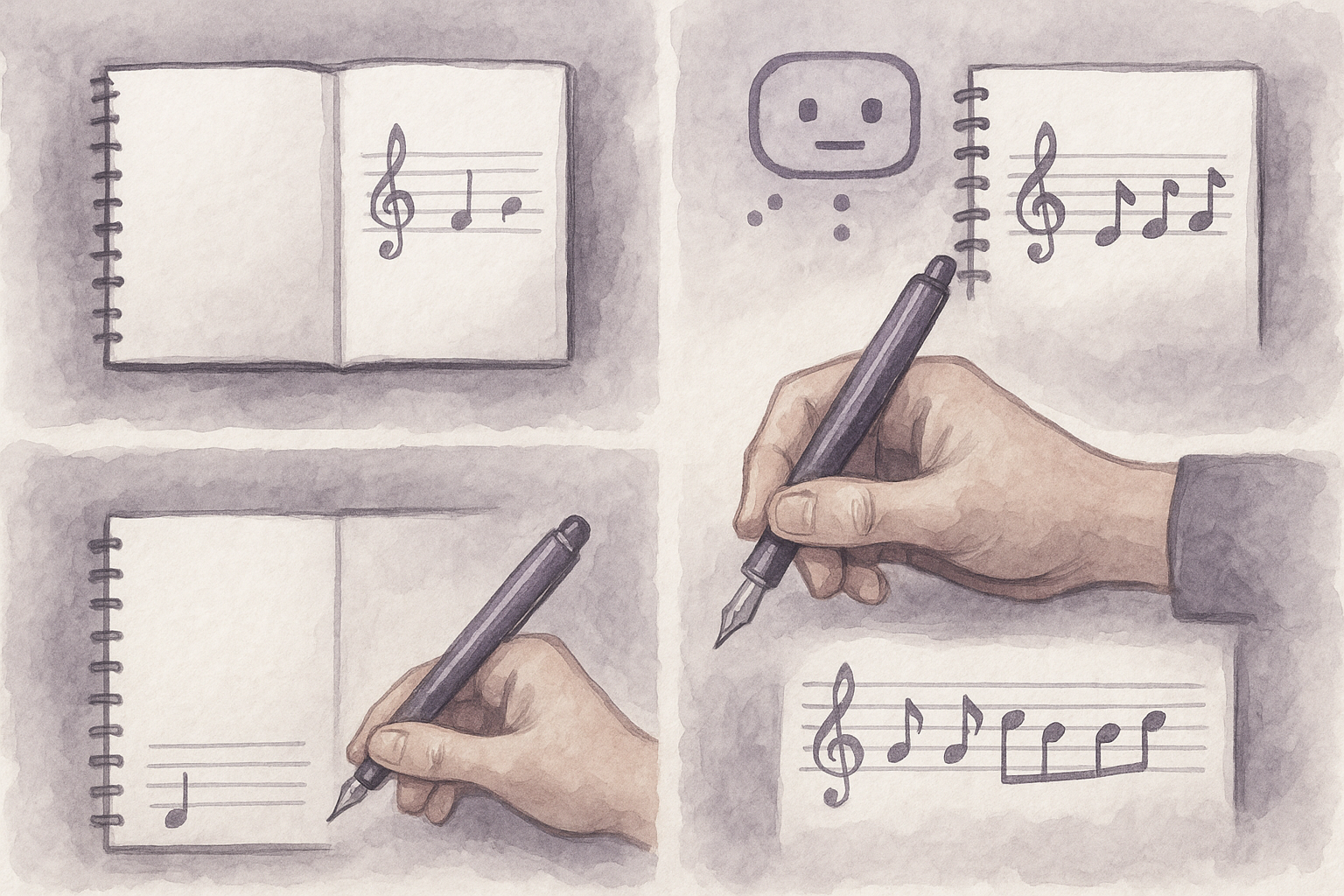
A song verse carries the part of the story that changes. It can introduce a place, reveal a detail, shift the speaker’s perspective or create a question that the chorus makes more meaningful. When every verse repeats the same idea in different words, the song may have a memorable hook but little movement. Learning how to write a song verse means giving each section a reason to exist.
Give each verse a job
Before writing a song verse, decide what the listener should learn, see or feel by the end of it. A verse might establish the situation, show the first sign of conflict or reveal something the speaker has been avoiding. Its job does not need to be dramatic. Even a small change can move the story forward.
Try assigning different functions to the sections of your song:
- Verse one: introduce the setting, relationship or situation.
- Chorus: express the central thought, promise or emotional refrain.
- Verse two: add a consequence, memory or complication.
- Bridge: offer a turn in perspective or a final piece of tension.
These are useful roles, not fixed rules. A song can begin in the middle of an argument or use a bridge to create uncertainty rather than resolution. The important question is whether each part changes the listener’s understanding of the song.
Practical tip: Complete this sentence for every verse: “After hearing this verse, the listener knows that…” If the answer is identical for two verses, look for a new detail or development.
Build a story with specific details
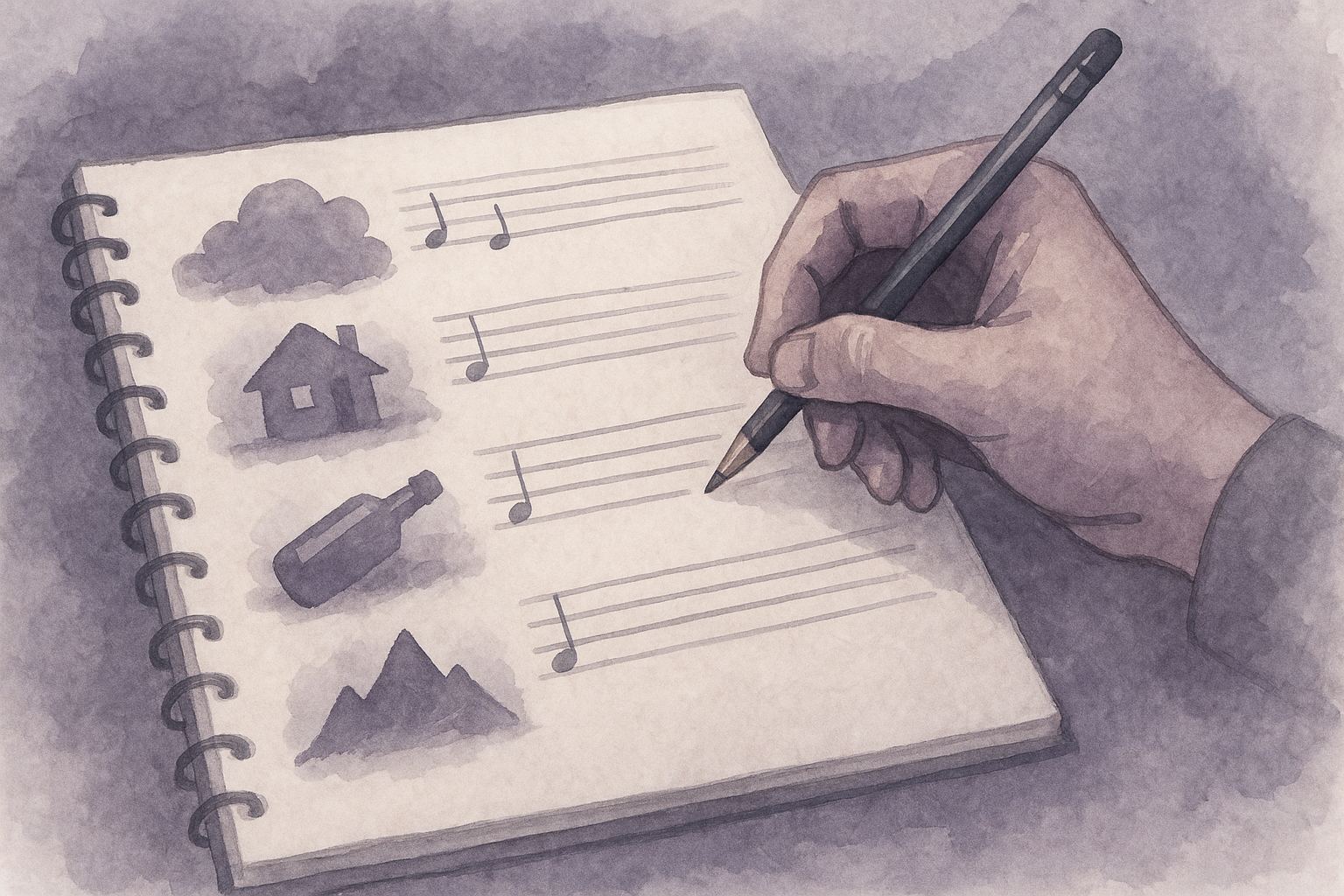
General statements tell the listener what a feeling is. Specific details let the listener experience the situation. Instead of beginning with “I miss you,” consider the object, place or action that makes the absence visible: an extra cup in the cupboard, a coat still hanging by the door or a name left unsent in a phone.
Start with a simple emotional idea, then ask three questions:
- Where is the speaker?
- What can the speaker see, hear or touch?
- What has just happened, or what is about to happen?
For example, the first draft below names the feeling but does not yet give the verse a scene:
I think about you every night
I wonder if you think of me
I wish that things could be all right
I wish that we were still a team
The revision introduces a place and an action. It does not explain everything, but it gives the listener something to follow:
The hallway clock forgets to move
Your jacket keeps its place
I fold the letter once, then twice
And leave it by the vase
The second version trades broad explanation for concrete images. It also leaves room for the chorus to name the larger feeling. That restraint helps the verse carry a story instead of resolving the emotion too soon.
Use the chorus as an anchor
A chorus often states the song’s recurring idea. The verses give that idea a changing context. If the chorus says the speaker is “still waiting,” the first verse might show where the waiting began, while the second shows what it has cost.
Imagine a chorus built around this line:
I’m still waiting by the light
For a sign that you’re coming home
A first verse could establish the habit:
When the last train leaves the station
I count the windows as they pass
There’s a photograph beneath the lamp
With a corner turning black
A second verse should not simply say that the speaker is still waiting. It can show a new stage of the same situation:
This morning I cleared out the drawer
And found your key inside
I held it up against the lock
Then set it back beside the light
The chorus now carries more weight because the listener has seen both the routine and the decision to preserve it. The repeated words have not changed, but their meaning has.
Create movement between verses
To write a song verse that carries the story, make the relationship between verses visible. The second verse can happen later in time, reveal information that was hidden, move to another location or show the result of an earlier choice.
Here are four kinds of movement you can test:
- Time: move from the night of an event to the morning after.
- Place: move from a private room to a public space.
- Knowledge: reveal something the speaker or listener did not know.
- Decision: show the speaker making, delaying or regretting a choice.
Write a one-line summary for each verse. For example: “She waits at the station.” Then: “She finds the key.” Then: “She decides whether to use it.” The summaries should not all describe the same emotional state. They should form a sequence of moments.
You can also remove a line that explains what the images already show. If a verse includes an unopened message, a packed suitcase and a hand on the door, you may not need to add “I am ready to leave.” Let the listener connect the details.
Revise the verse for voice and rhythm
A strong story still needs words that sound natural in the singer’s voice. Read the verse aloud without music, then speak it at the pace you imagine for the song. Notice where you run out of breath, where a sentence feels crowded and where an important word receives no emphasis.
Do not choose a rhyme only because it is exact. Compare the meaning, sound and emotional effect of several options. A perfect rhyme may make the line feel neat but predictable; a looser rhyme may preserve the image and sound more conversational.
Ilena can support this stage as an editor for creative writing: use it to explore wording, work with rhymes and compare possible formulations while keeping responsibility for the final choice. A suggestion is only useful if it preserves the scene, voice and intention you are developing.
For example, suppose you have this line:
I left the key beneath the old front mat
You might test alternatives such as “under the worn-out mat” or “inside the cracked flowerpot.” They do not create the same song. The first emphasizes habit, the second emphasizes wear and time, and the third changes the image entirely. Choose the version that serves the story, not simply the one that produces the most convenient rhyme.
Read the complete verse again after every substantial change. A line that works by itself may interrupt the scene, alter the speaker’s character or make the next line harder to sing.
Understand verse, chorus and bridge
When people ask how to write a song verse chorus bridge, they are often looking for a structure that tells them what belongs where. A useful distinction is that the verse develops the situation, the chorus returns to the central idea and the bridge creates contrast or a turn.
| Section | Main question | Typical contribution |
|---|---|---|
| Verse | What is happening now? | Scene, detail, action or new information |
| Chorus | What does this mean? | Recurring idea, emotional center or memorable statement |
| Bridge | What changes before the song returns? | New perspective, contrast, admission or decision |
Some songs use no bridge, repeat a single verse or place the chorus at the beginning. Structure should serve the story. If removing a section makes the song clearer, that may be the right revision.
The goal is not to make every verse carry more information than the listener can absorb. Give each one a clear focus, choose a few precise details and leave enough space for the chorus to resonate.
Frequently Asked Questions
What should a song verse include?
A song verse should include a specific moment, image, action or piece of information that develops the song. It should give the listener a clearer sense of the situation without repeating the chorus in different words.
How can I make my second verse different from my first?
Make the second verse change the story through time, place, knowledge or decision. If the first verse introduces a situation, the second verse can show its consequence or reveal a detail that changes how the listener understands it.
What is the difference between a verse and a chorus?
A verse usually develops the situation with changing details, while a chorus returns to the song’s central idea. The verse gives the chorus context, so the repeated words can gain new meaning as the story progresses.
Does every song need a bridge?
No, every song does not need a bridge. A bridge is useful when the song needs a contrasting perspective, admission or decision before returning to the chorus, but a clear verse-and-chorus structure can stand on its own.