Writing Software for Writers: What Matters When the Words Are the Work
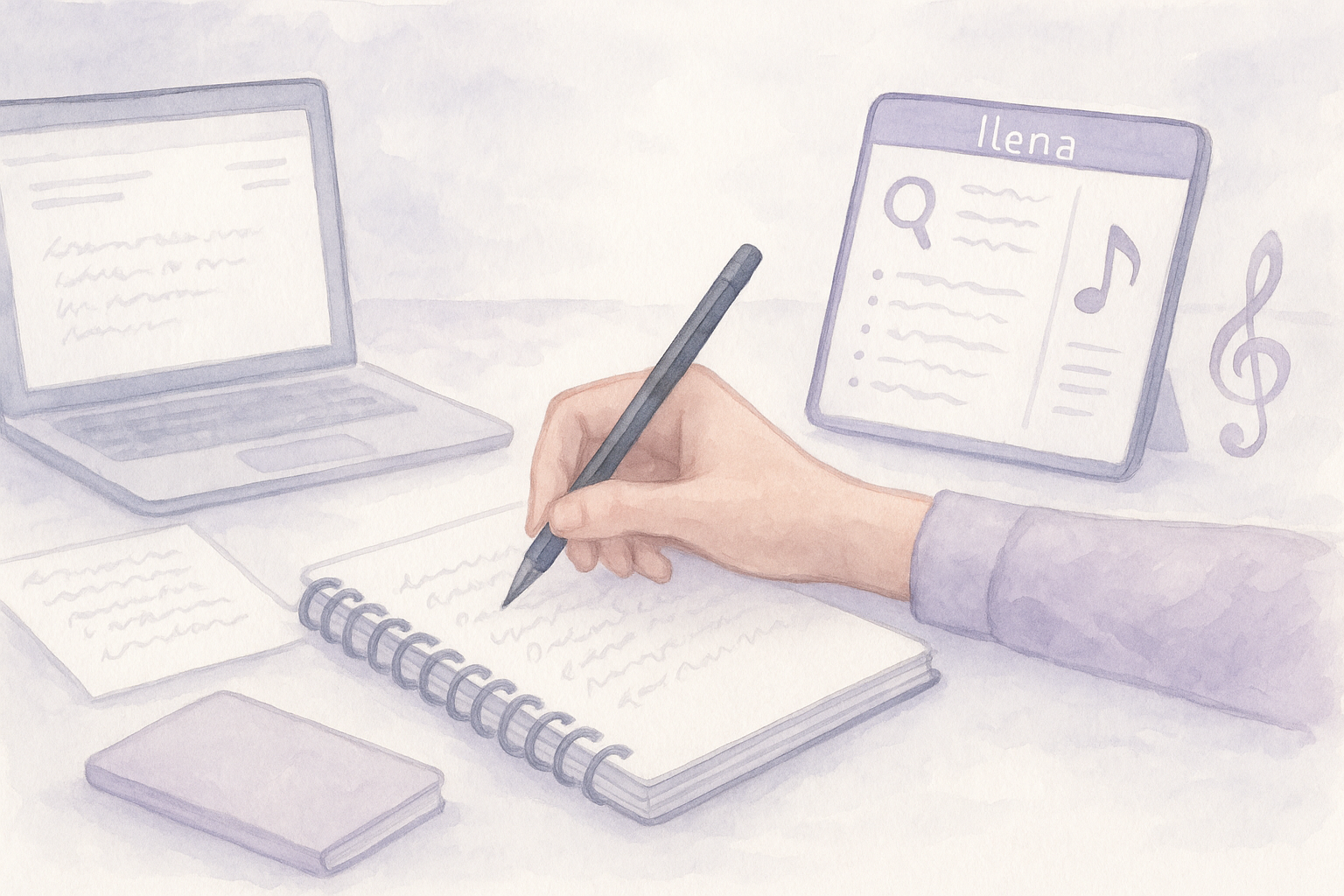
When the words are the work, the software you use should support your attention rather than compete for it. A general-purpose word processor may be enough for drafting a letter or formatting a report, but creative writing often asks for more: a way to compare versions, search for the right nuance, test a line aloud and keep the author’s intention in view.
Start with the writing task
“Writing software for writers” can describe very different tools. A novelist, a screenwriter and a lyricist may all need to draft and revise, but they do not necessarily need the same environment.
Before choosing an application, identify the part of writing that takes the most attention. Are you trying to keep research close to a manuscript? Track scenes and characters? Find a rhyme that does not distort the meaning of a line? Compare several revisions without losing an earlier phrase?
The answer matters more than the number of features. A long list of tools is not automatically useful if it adds decisions to a process that already requires concentration.
| Writing practice | Useful priorities |
|---|---|
| Novels and long fiction | Long-form organization, chapters, research and character notes |
| Screenwriting | Scene structure, script conventions and production-oriented formatting |
| Lyrics and poetry | Word choice, sound, rhyme, line length and careful revision |
| Essays and articles | Research, outlining, citations and clear document structure |
What general-purpose tools do well
A standard word processor remains useful because it handles the basic work reliably: entering text, moving paragraphs, correcting mistakes, sharing documents and exporting files. It is often the right place for a finished manuscript or a document that must follow a specific format.
It can also provide a calm space for a first draft. When you already know what you want to say, a blank page and a familiar keyboard may be all you need.
The limitation appears when the writing problem is not formatting but exploration. A word processor can hold several versions of a line, but it may not help you compare their sounds or discover a more precise word. You can search through a dictionary or rhyme reference separately, yet moving between several windows can interrupt the connection between intention and language.
Practical tip: Choose a specialized tool for a recurring writing problem, not for the promise of doing the writing for you. If your main difficulty is finding a word that still sounds like you, look for support at that point in the process.
Where specialized writing software helps
Specialized writing software is most valuable when it reflects the shape of a particular creative practice. For lyrics and poetry, that may mean exploring related words, comparing rhyme possibilities, checking the approximate length of a line and returning to earlier wording during revision.
These functions should remain aids to judgment. A rhyme can be technically exact and still be wrong for the image. A shorter line can be easier to sing and still lose an important hesitation. A more unusual word can add texture or simply sound unlike the rest of the poem.
Ilena is an editor for creative writing that supports lyricists and poets as they find words, work with rhymes and refine their texts while keeping control of the creation. It is a more natural fit for a songwriter or poet who is examining language line by line than for a novelist looking for a complete system of chapters, character profiles and research files.
The distinction is useful because “specialized” should not mean “automatic.” The writer still chooses the image, the emotion, the point of view and the final wording. The software can help make alternatives easier to examine; it cannot decide what the poem is trying to mean.
An example: from draft to revision
Consider a lyric about leaving a familiar place. The first version might be:
I carry the morning in a paper bag
Your old street fading behind me
The image of a morning carried in a paper bag is concrete, but the second line explains the departure rather than giving the listener something to see. A revision could be:
I carry the morning in a paper bag
The blue house shrinking in the glass
The second version gives the departure a visible detail. It also changes the sound and the rhythm of the couplet, so it is not automatically better in every song. If the fading street was central to the writer’s meaning, the first version may remain the right choice.
A writing tool can support this kind of revision by helping the writer explore nearby words, compare possible rhymes or consider the length of each line. The important decision still belongs to the writer: which version carries the intended feeling without adding an image that does not belong?
Read both versions aloud or sing them against the surrounding lines. A count can provide a useful reference, but it cannot determine whether a line is comfortable in a melody. Pauses, emphasis and delivery can change how the same number of syllables feels.
Choose without losing your voice
The best software for writers is not necessarily the tool with the most features. It is the one that reduces friction at the stage where you regularly get stuck, while leaving enough space for uncertainty, silence and revision.
Look for five qualities:
- Focused support: the tool addresses a real part of your writing practice.
- Clear boundaries: it does not pretend to replace your judgment or creative effort.
- Useful comparison: it lets you examine alternatives without treating one suggestion as automatically correct.
- Respect for drafts: your revisions remain part of a process rather than disappearing behind a single final version.
- A fit for your form: the tool supports lyrics and poetry differently from novels, scripts or essays.
If you write songs or poems, try applying those questions to one passage you are already revising. Keep the original line, explore a few possible directions and listen for the difference between a technically attractive option and a phrase that genuinely belongs to your work.
Frequently Asked Questions
What should writing software do for a lyricist?
Writing software for a lyricist should support tasks such as exploring words, considering rhymes, examining line length and revising phrases. It should help the lyricist compare possibilities while leaving the meaning, voice and final choices with the author.
Is a word processor enough for writing poetry?
A word processor can be enough for drafting and formatting a poem. A specialized creative writing editor may be useful when the poet wants focused support for word choice, sound, rhyme or line-by-line revision.
Can rhyme software choose the best word for a poem?
Rhyme software can help a writer explore possible words and sounds, but it cannot determine which word best serves the poem. The poet must consider meaning, tone, rhythm and whether the phrase still sounds authentic.
Does checking line length make lyrics easier to sing?
Checking line length can give a lyricist a useful structural reference, but it cannot guarantee singability. Melody, emphasis, pauses and delivery also affect how a line feels when it is performed.
Is Ilena designed for novelists and screenwriters?
Ilena is positioned as a creative writing editor for lyricists and poets who are working with words, rhymes and revisions. Novelists and screenwriters may need additional tools for chapters, scenes, characters, research and specialized formatting.