Lire en français · Leer en español
Spoken Word Poetry: Write for the Ear

Spoken word poetry is written to be heard: its meaning lives not only in the words, but in breath, address, silence and repetition. To write for the ear, begin with a thought you want someone to hear, speak each draft aloud and revise wherever your voice reveals a pause, a stumble or a word that does not sound like yours.
Start with a listener
Before choosing a rhyme or a rhythm, decide who the poem is speaking to. It could be a friend, a stranger, a younger version of yourself or someone who will never hear it. You need not name that person, but knowing who they are can help you choose what to explain, what to leave unsaid and when to say “you.”
Suppose the poem begins with a missed call. These lines are original examples written for this guide:
The scene is clear, but the third line explains more than a listener can feel. Speaking it aloud might lead you to a more particular image:
“You know” brings the listener close. The cup gives the speaker something to do instead of announcing an emotion. The revision also changes the poem’s direction: it now asks the audience to wonder what happened between the two people. That is a choice the writer makes, not a rule that every spoken word poem needs an object or a direct address.
Write with your breath
Read a draft at the pace you would use in front of another person. Mark where you naturally breathe, then notice whether the sentence gives you room to do it. A line break can invite a pause, but it cannot force one; your voice is the test.
Try speaking this sentence in one rush: “I kept the cup on the shelf because throwing it away felt like admitting you were not coming back.” The thought may be right, yet the listener has little time to take in either the cup or what it means. One possible arrangement is:
The shorter units offer places to breathe and let the final thought arrive gradually. They also make the speaker sound more deliberate. If your poem calls for a breathless rush instead, keep one—but rehearse it so that the rush is a choice you can perform, not a sentence you cannot finish.
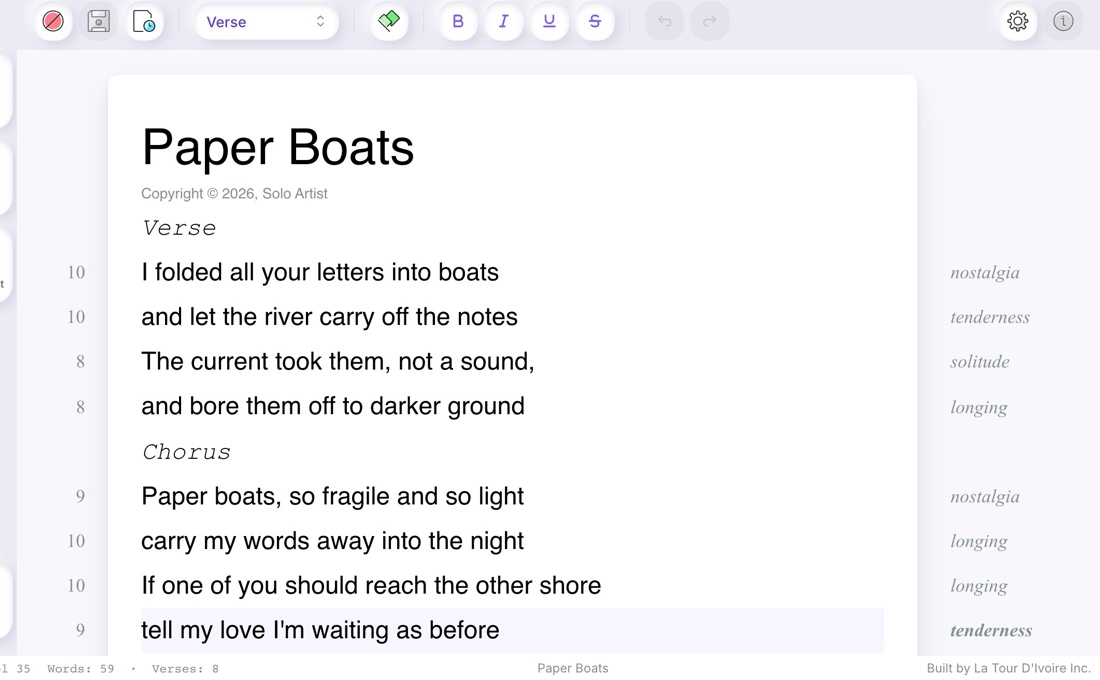
A syllable count can help you spot a line that has grown longer than its neighbours. It cannot tell you where to breathe or whether a phrase feels natural in your mouth. In Ilena, you can use the syllable count as a reference while writing, then say the lines yourself to decide what stays.
Give silence and repetition a job
Silence gives listeners time to make a connection. After “You know that chipped blue cup?” a pause can let them picture it before the speaker says why it matters. Try the pause aloud without writing a stage direction first. If it changes what the next line means, you have found a useful place for it.
Repetition can change a phrase rather than merely repeat it. Imagine returning to “I kept the cup” three times: first as a fact, then as a defence, and finally as a decision to let it go. The words remain familiar while the speaker’s relationship to them shifts.
Choose repeated words for their meaning and sound. A near-synonym may look more varied on the page yet lose the plainness that makes a refrain land. If you are unsure whether “kept,” “saved” or “held on to” expresses the thought, compare their nuances and speak each version in the line before choosing.
Try the alternatives with a word from your own draft, then keep the one that sounds true when you say the whole line aloud. Compare synonyms for “kept” (opens in a new tab)
Revise by speaking
Make one recording of yourself reading the draft, even if no one else will hear it. Listen once without looking at the page. Where do you lose the thread? Which image remains with you? Those observations are more useful than trying to make every line equally emphatic.
On the next pass, change one thing at a time. Remove an explanation after a vivid image, move a pause, or replace a word you keep tripping over. Read again. If a line is hard to say, you might shorten it—or discover that the difficulty expresses exactly the hesitation you meant to convey.
Your written poem can include line breaks that support your delivery, but it need not record every breath. Leave yourself room to respond to the audience and the space when you perform.
Spoken word and slam
Spoken word poetry is a broad practice of writing and performing poetry for listeners. Slam is a competitive setting in which spoken word poems may be performed. A poem does not have to enter a competition, follow a particular intensity or build toward a dramatic ending to be spoken word.
That distinction can free up the draft. A quiet admission, a long pause or a recurring ordinary object may carry your poem better than a louder closing line. Write for the encounter you want with your listeners, then test whether they can follow it with their ears.
Frequently asked questions
What is spoken word poetry?
Spoken word poetry is poetry written or shaped for oral performance. Its wording, pacing, pauses and address to listeners all contribute to how the poem is understood.
Does spoken word poetry have to rhyme?
Spoken word poetry does not have to rhyme. Rhyme can make a phrase memorable, but a precise image, a pause or a repeated line may serve the poem better.
What is the difference between spoken word and slam poetry?
Spoken word describes a broad approach to poetry performed for listeners; slam is a competitive setting where such poems may be performed. A spoken word poem does not need to be written for a competition.
How do I know whether a spoken word poem works aloud?
Read the spoken word poem at the pace you intend to perform it, then listen to a recording without following the written text. Notice where the meaning becomes hard to follow, where you need a breath and which phrases stay with you; revise and try again.