Song Lyric Generator: What to Use When You Want Help Without Losing Your Voice
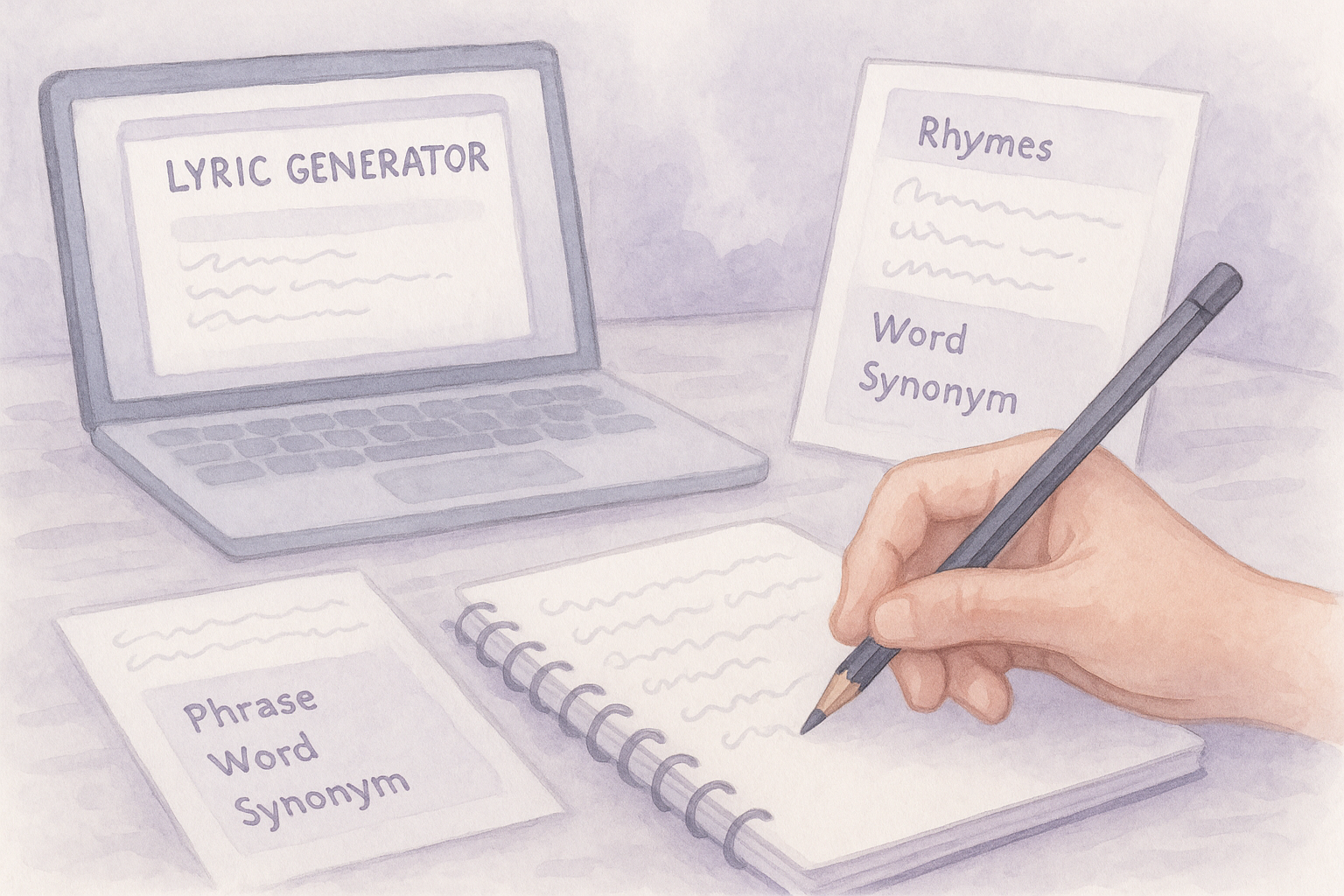
If you are searching for a song lyric generator, you may be looking for more than a finished set of lyrics. You may want help finding a rhyme, tightening a line, or moving past a blank page without handing over the song’s meaning and voice.
What a song lyric generator does
A song lyric generator usually creates lines, verses, hooks, or complete drafts from a topic, mood, genre, or set of instructions. Some tools are designed for broad songwriting ideas, while a rap song lyric generator may emphasize rhyme density, punchlines, internal rhyme, or a particular flow.
This can be useful when you need a starting point. A generated draft may help you notice a possible theme or show several directions for a chorus. But a draft is not automatically a song that sounds like you. It still needs to be tested against your experience, your vocabulary, your musical phrasing, and the emotion you want the listener to feel.
The main question is therefore not only, “Can this tool write lyrics?” It is also, “How much of the writing do I want to remain mine?”
Practical tip: Treat any automatic lyric output as material to examine, not as a final answer. Keep a line only when you understand why it belongs in your song.
Generation versus writing assistance
Automatic generation and writing assistance can look similar from the outside, but they support different creative roles.
| Approach | What it can help with | What remains your responsibility |
|---|---|---|
| Automatic generation | Producing a quick draft from a topic, mood, or format | Checking whether the images, perspective, and language genuinely fit your song |
| Writing assistance | Exploring rhymes, word choices, line length, and alternative formulations | Choosing the meaning, emotional direction, and final wording |
| Manual revision | Testing a line against your melody, rhythm, and intention | Deciding what to keep, change, or remove |
A writing assistant does not need to replace your creative process. It can function more like a focused workspace for language. You bring the memory, point of view, and intention; the tool helps you examine the words more closely.
That distinction matters for songs about personal experiences. A generic line about heartbreak may be technically clear, but a specific detail from your own life gives the song its identity. Assistance is most useful when it helps you develop that detail rather than covering it with familiar phrases.
How to keep your voice while getting help
Keeping your voice does not mean refusing every tool. It means setting the creative direction yourself and evaluating every suggestion against it.
Start with your own concrete material
Before looking for rhymes or alternatives, write down a few details only you would choose: an object, a place, a gesture, a sentence someone said, or a physical sensation. These details give the lyric a point of view.
For example, “I miss you” states an emotion, but it does not yet show the listener what missing someone feels like. You might begin with a more specific image:
The spare key still turns in the lock
Though nobody waits upstairs
The image creates a situation without explaining everything. You can now revise the lines for sound and precision while protecting the central detail.
Ask what each line needs to do
A line may carry an image, move the story forward, create a contrast, establish a rhyme, or fit a musical phrase. It does not have to do all of these things at once.
When you examine a possible change, ask:
- Does the new wording make the image more precise?
- Does it preserve the feeling or change the meaning?
- Does the rhythm fit the melody or delivery?
- Does the rhyme sound natural in your accent and style?
- Would you actually say or sing this line?
These questions keep the author in charge. A rhyme is a possibility, not an instruction.
Explore several nuances instead of accepting the first synonym
Words that appear similar can create different emotional distances. “Leave,” “go,” “ disappear,” and “walk away” do not imply the same action or attitude. Exploring alternatives is useful only when you compare their meanings as carefully as their sounds.
Ilena is an editor for creative writing that can support this kind of exploration. You can work with rhymes, examine wording, and refine lines while deciding which options still sound like your own writing. The tool can open possibilities; you decide which possibility belongs in the song.
A practical lyric revision example
Suppose you are writing about returning to a familiar place after a relationship has ended. Your first line might be:
I came back to the house where we used to be
The meaning is understandable, but “where we used to be” is abstract. It may also be difficult to place naturally in a melody. You could make the setting more concrete:
I came back to the house with your coat on the chair
This version introduces an object and a visual detail. It is not automatically better for every song, though. It changes the focus from the shared past to the absence represented by the coat. If the coat is not part of your story, the image may sound polished but false.
You might then explore a second line that works with the sound of “chair”:
I came back to the house with your coat on the chair
And rehearsed all the words you were never there to hear
The end rhyme connects “chair” and “hear,” but the line is long and may need to be sung quickly. You could keep the idea while changing the rhythm:
Your coat on the chair
Words I never got to share
This revision is shorter and more symmetrical, but it loses the movement of returning to the house. The choice depends on the melody and the role of the passage. A useful writing tool can help you explore these routes, but it cannot decide which trade-off expresses your song.
Practical tip: Read each version aloud at the speed you expect to sing it. A line that looks balanced on the page may feel crowded when spoken or placed over music.
Choosing the right tool
The best tool depends on the problem you are trying to solve. If you want a complete draft from a short description, a song lyric generator may provide a starting point. If you already have an idea and want to develop your own lines, an editor focused on creative writing may be a better fit.
Consider these questions before choosing:
- Do you want a complete draft, or help with specific lines?
- Can you explore rhyme without giving up the original context?
- Can you compare word choices and their shades of meaning?
- Can you work on line length and rhythm as part of revision?
- Does the process leave you responsible for the final text?
- Are the tool’s language support, features, and terms clear?
A free song lyric generator may seem like the simplest option, but price is only one part of the decision. Check what the tool actually helps you do, whether its output suits your writing process, and whether you can revise the result rather than simply accept or reject a finished block of text.
For writers who want help without handing over the song, Ilena offers a different path: begin with your own words, explore language around them, and revise with intention. You remain the person who chooses the image, the voice, and the final line.
Frequently Asked Questions
What is a song lyric generator?
A song lyric generator is a tool that creates lyric ideas or drafts from information such as a topic, mood, genre, or structure. It can provide a starting point, but the writer still needs to evaluate the meaning, voice, rhythm, and originality of the result.
Is a rap song lyric generator different from a regular lyric generator?
A rap song lyric generator may focus more on rhyme patterns, internal rhymes, punchlines, word density, or flow. Those features do not replace the rapper’s own delivery, perspective, and decisions about what sounds natural in the chosen style.
How can I use lyric tools without losing my voice?
Begin with your own images, memories, and intentions before exploring wording or rhymes. Keep a suggestion only when it preserves what you want to say and sounds like something you would actually write or perform.
Is a free song lyric generator enough for songwriting?
A free song lyric generator may be enough for a quick idea, but its usefulness depends on the kind of help you need. If you want to develop your own lines, look for tools that support focused exploration and revision instead of only producing complete drafts.
What does Ilena help lyric writers do?
Ilena is a creative writing editor that helps lyric writers explore rhymes, wording, vocabulary, and line revisions. The writer remains responsible for the song’s intention, creative choices, and final text.