Music Lyrics Creator: Help, Not Replacement
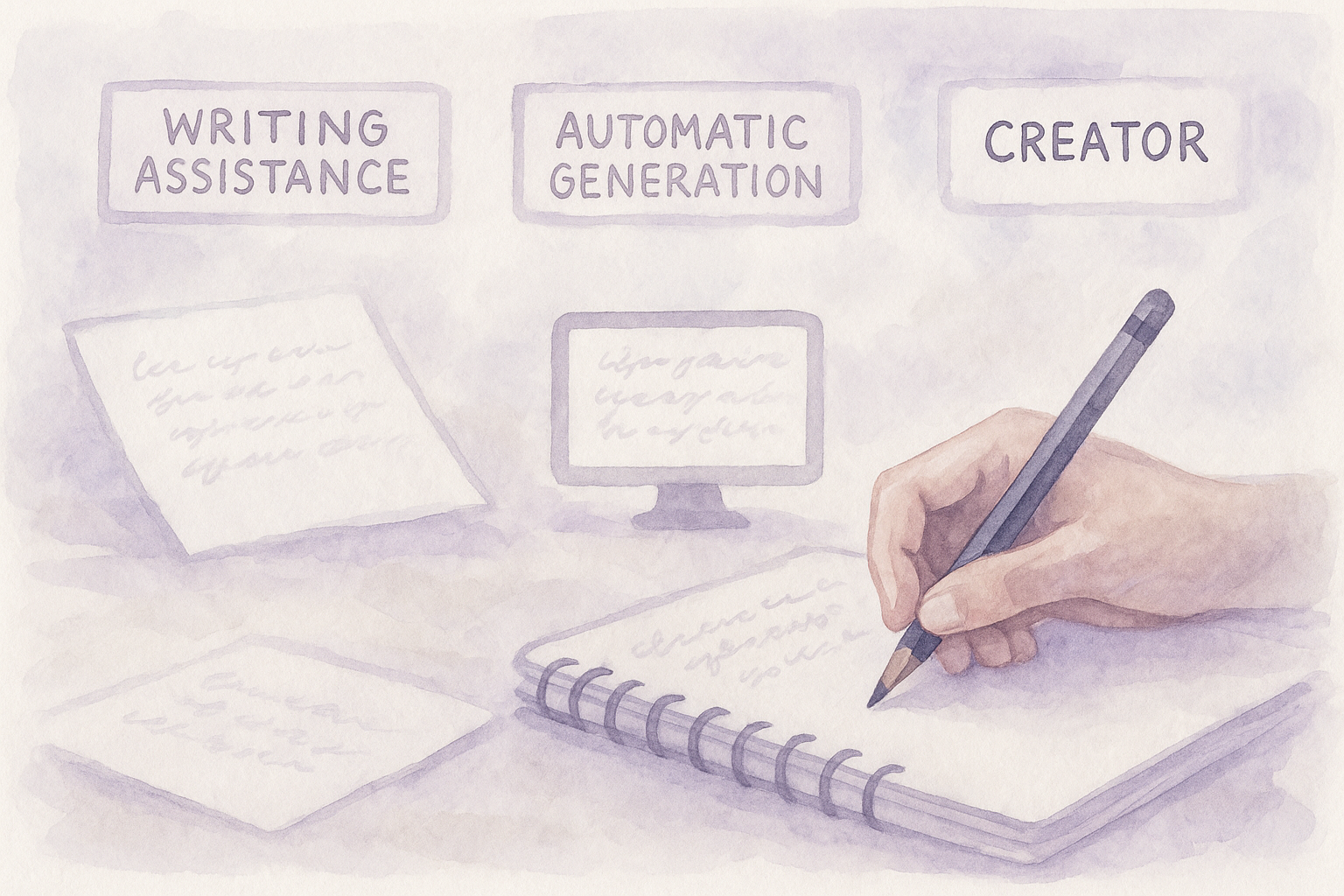
When someone searches for a music lyrics creator, they may be looking for very different things: a tool that writes lyrics automatically, a source of ideas, or a focused workspace for developing words they have already begun. Those approaches are not interchangeable.
What “lyrics creator” can mean
The phrase music lyrics creator often describes a tool that produces lines from a short instruction. In that model, you provide a subject, mood, genre, or situation, and the software returns a draft. A music lyric creator may also refer to a songwriting workspace that helps you shape lyrics you have started yourself.
The difference matters because the result is not the only thing that defines a writing tool. The process affects how you discover an image, decide what a line means, and recognize whether the words sound like you. A fully automatic lyric creator may be useful when you want to examine a possibility quickly. It does not, by itself, know which memory you want to protect, which detail feels too private, or which imperfect phrase carries the emotional weight of your song.
For many writers, the most useful tool is neither a blank page nor a button that produces a complete song. It is support at a specific point in the process: finding a less obvious rhyme, comparing two word choices, or revising a line without losing its intention.
Generation and assistance are different
Generation starts with the tool producing much of the text. Assistance starts with your writing problem. You might already have a chorus, a central image, or an unfinished verse, and need help exploring what the line could become.
| Approach | What it emphasizes | What the writer must still decide |
|---|---|---|
| Automatic generation | Producing a complete or substantial draft quickly | Whether the result expresses a personal intention and voice |
| Writing assistance | Exploring language around a draft or a defined problem | Which words, images, sounds, and revisions belong in the song |
| Manual revision | Testing the meaning, rhythm, and specificity of each line | How the final version should sound and what it should leave unsaid |
Neither approach removes the need for judgment. A line can rhyme and still be vague. It can fit a pattern and still sound unlike the person writing it. It can be grammatically correct and still miss the feeling of the scene.
Practical tip: Before looking for a rhyme, write down what the line must preserve. It could be a concrete image, a point of view, a number of beats, or the tension between two ideas. Use that requirement to judge every possibility you explore.
The work that remains yours
Writing lyrics is more than arranging words into lines. It includes noticing which detail makes a situation specific, choosing how directly to express an emotion, and deciding what the listener should infer. Those choices are part of authorship, whether you write alone, collaborate with another person, or use a tool during revision.
Consider the difference between these two starting points:
I miss the night we said goodbye
The city lights were cold
The first line states the feeling, while the second offers an image without yet showing why it matters. Instead of asking a tool to write an entire verse, the writer can identify the scene and add a detail that belongs to that memory:
I miss the payphone by the closing bar
Where your last “maybe” turned to blue
The revision changes the compromise. It is more concrete and introduces a visual association, but it also makes the memory more specific and perhaps less universally open. The writer may prefer the original directness, reject the image, or continue revising it. No version is automatically better because it sounds more poetic.
A lyric creator is most useful when it leaves room for that decision. The point is not to accept the first fluent line. The point is to have more language to examine while keeping the reason for the song in view.
A lyric revision in practice
Suppose you are writing about waiting for someone who has already moved on. Your draft contains this line:
I keep waiting in the rain
The idea is understandable, but “rain” is a familiar image. You could first describe the exact scene in your own notes: where you are, what remains open, and what you are refusing to admit. Perhaps the real detail is a station sign flickering after the last train.
I wait beneath the station sign
Still blinking after the last train
This version gives the listener a place and an action. It also creates a new rhythmic question: the two lines do not have to match perfectly, but the melody may need space around “station sign” or “last train.” You might test another wording:
I wait beneath the failing sign
Still lit after the last train
Now “failing” is more concise, while “still lit” changes the image slightly. The choice depends on the intended voice, the melody, and the emotional meaning. A tool can help you explore related words or rhymes, but you decide whether the language still describes the scene you meant to write.
This process also shows why rhyme should serve the lyric rather than control it. A convenient rhyme can pull the line toward a meaning you did not intend. Exploring several options is useful only when you compare their nuance and keep the song’s situation in charge.
Where Ilena fits
Ilena is a creative writing editor for songwriters and poets. It supports the part of writing where you are looking for words, working with rhymes, and refining lines. You bring the subject, point of view, images, and intention; Ilena gives you a place to explore language around those choices.
That makes Ilena different from a promise to create a finished song automatically. It is also different from a music production tool: it does not turn a lyric into a recording, arrange instruments, or replace the musical decisions involved in performing a song.
You can begin with a line you want to preserve and examine alternatives around it. You can compare a familiar rhyme with a less expected one, then ask yourself which option sounds natural in your voice. You can revise a phrase for clarity without assuming that a smoother version is the right one.
The same approach works for a nearly finished chorus. Instead of treating every suggestion as an answer, read each possibility against three questions:
- Does it keep the meaning I intended?
- Does it sound like something I would say or sing?
- Does it serve the scene, rhythm, and emotion of the song?
If the answer is no, discard the suggestion. Rejection is part of revision, not evidence that the tool failed or that your draft is finished. The purpose of assistance is to make comparison easier while leaving the creative decision with you.
Frequently asked questions
What is a music lyrics creator?
A music lyrics creator is a tool or service that helps produce or develop words for songs. Some tools generate substantial lyric drafts automatically, while others support writing tasks such as exploring rhymes, comparing wording, and revising lines.
Is Ilena an automatic lyric generator?
Ilena is a creative writing editor that supports lyric and poetry writing. It helps writers explore language, work with rhymes, and refine their text rather than presenting itself as a replacement for the writer’s intention and creative judgment.
Can a lyric creator write a song in my personal voice?
No tool can guarantee that a generated or suggested line expresses a writer’s personal voice. A writer develops that voice by choosing specific images, testing language, revising deliberately, and rejecting words that do not feel true to the song.
Should I choose a rhyme even if it changes the meaning of my line?
A rhyme should not take priority over the meaning of a lyric. Explore the rhyme as one possibility, then keep it only if it preserves the scene, intention, and voice you want the listener to hear.