How to Edit Poetry Without Flattening Your Voice
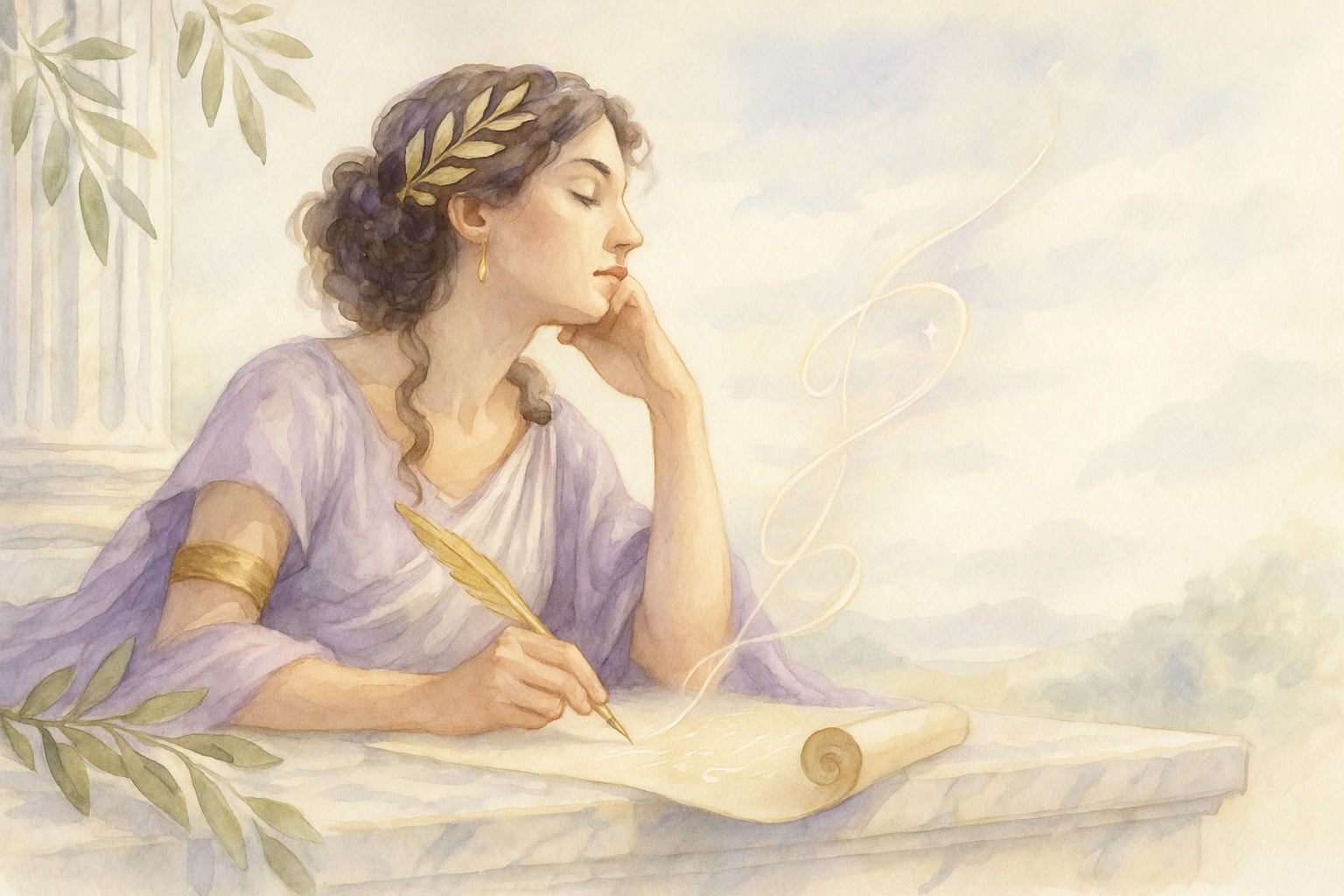
Editing a poem is not the same as correcting it until every line sounds polished. A poem can be technically smooth and still lose the hesitation, strangeness, or emotional pressure that made it yours. Learning how to edit poetry means making deliberate choices: tightening what distracts, testing what carries the feeling, and protecting what gives the poem its voice.
Begin with the poem's intention
Before changing a word, write down what the poem is trying to hold. Keep the answer concrete. It might be about returning to a childhood house, wanting to forgive someone, or noticing how an ordinary object has changed meaning.
This first statement is not a summary for a reader. It is a reference point for you. During revision, it helps you ask whether a change makes the poem more precise or merely more conventional.
Consider this small opening:
I kept the blue cup
after the kitchen was gone.
The blue cup may be less important as an object than as evidence of what remains. If the poem is about preserving a connection, replacing “blue cup” with a more impressive image could weaken the tension. A familiar object can carry the poem precisely because the speaker does not explain everything about it.
Practical tip: Write one sentence describing what you do not want the poem to lose. Read that sentence before each major revision.
Tighten without erasing texture
One useful part of learning how to revise a poem is distinguishing between unnecessary language and meaningful excess. Repetition, pauses, and slightly awkward phrasing can be deliberate. The question is not “Can I remove this?” but “What changes if I remove it?”
For example:
At the edge of the field, I waited there
where the fence had broken open.
“At the edge of the field” and “where the fence had broken open” both locate the speaker. “I waited there” may be redundant, but it also creates a pause and emphasizes the act of waiting. You could revise the lines in several ways:
At the field's edge, I waited
where the fence had broken open.
This version is more compact and gives “waited” a stronger position. It also changes the pace. Another possibility is:
At the edge of the field,
I waited where the fence had broken open.
Here, the line break makes the location feel like a pause before the action. Neither revision is automatically better. The right choice depends on whether the poem needs urgency, stillness, or a more conversational voice.
Test rhythm and sound aloud
A poem can look balanced on the page and feel heavy when spoken. Read each version aloud at a natural pace, then read it again more slowly. Listen for places where your voice rushes, stalls, or gives unexpected emphasis.
Do not treat a regular beat as the only sign of success. A broken rhythm may express uncertainty or resistance. A long line may create a sense of thought spilling forward. A short line may make an image feel final.
Take these alternatives:
The rain kept tapping on the glass
long after I turned out the light.
The rain tapped the glass
after I turned out the light.
The second version is shorter, but it removes “kept,” which suggests duration, and “long,” which stretches the silence after the light goes out. If the poem depends on persistence, the extra words may be doing important work. If the poem needs a colder, sharper movement, the shorter version may be the better fit.
When you revise, mark the words you naturally stress. Then ask whether those stresses support the emotional movement of the poem. Reading aloud reveals choices that silent editing can hide.
Compare versions instead of guessing
Revision becomes less destructive when you keep alternatives visible. Save the original stanza before making changes, then place the new version beside it. This makes it easier to notice what improved and what disappeared.
For instance:
Original
The hallway held the smell of rain,
and every door was almost home.
Revision
The hallway smelled of rain;
each door was almost home.
The revision removes “held” and “every,” which makes the lines leaner. It also changes “and” to a semicolon, creating a firmer relationship between the two images. But “every door” may suggest repeated hope, while “each door” sounds more measured. The shorter version is not simply an upgrade; it makes the speaker feel more controlled.
If you use Ilena during this stage, keep your intention in front of you. Explore possible wording or sound relationships as material for comparison, not as instructions to accept automatically. The useful question remains yours: which version says what you mean in a voice that still feels like your own?
Practical tip: Give each draft a neutral label such as “field,” “rain,” or the date. Labels like “better” and “worse” can make you defend a judgment before you have listened to the poem.
Make the final choice yours
A poem is not finished because every line is unambiguous. Some poems need a little resistance. An image can remain open, a sentence can turn unexpectedly, and a familiar word can be more honest than a rare one.
Before your final pass, review the poem at four levels:
- Intention: Does the poem still hold the feeling or question that brought you to it?
- Images: Are the concrete details specific enough without explaining themselves?
- Sound: Do the line breaks, stresses, and repeated sounds support the movement?
- Voice: Could these choices belong to you, or do they sound borrowed from an idea of what poetry should sound like?
Then read the poem once without editing. Notice the line that stays with you and the place where your attention leaves. Make one final change only if you can explain what it protects or clarifies.
Good poem revision is not a search for a flawless surface. It is a way to bring the poem closer to its own pressure while allowing your particular way of seeing to remain visible.
Frequently asked questions
How do I edit poetry without losing my voice?
Keep the poem's original intention visible and evaluate each change against it. Preserve unusual images, pauses, and repetitions when they create meaning rather than removing them simply because they are less conventional.
What should I revise first in a poem?
Start with the poem's central intention, then examine images, line breaks, rhythm, and unnecessary explanation. Revising the purpose of a stanza before correcting individual words helps prevent polished lines from drifting away from the poem's meaning.
Should a poem have a regular rhythm?
A poem does not need a regular rhythm to work. Reading the poem aloud helps you decide whether its pace and stresses support the feeling, including moments where an uneven rhythm is an intentional part of the voice.
Is a shorter poem always a better poem?
A shorter poem is not automatically better. Removing words can improve focus, but it can also remove duration, hesitation, texture, or emotional context that the poem needs.
How can Ilena help when I revise a poem?
Ilena can support exploration of wording and sound while you compare possible revisions. It does not determine the poem's intention or final form; the poet remains responsible for choosing what preserves the poem's voice.